
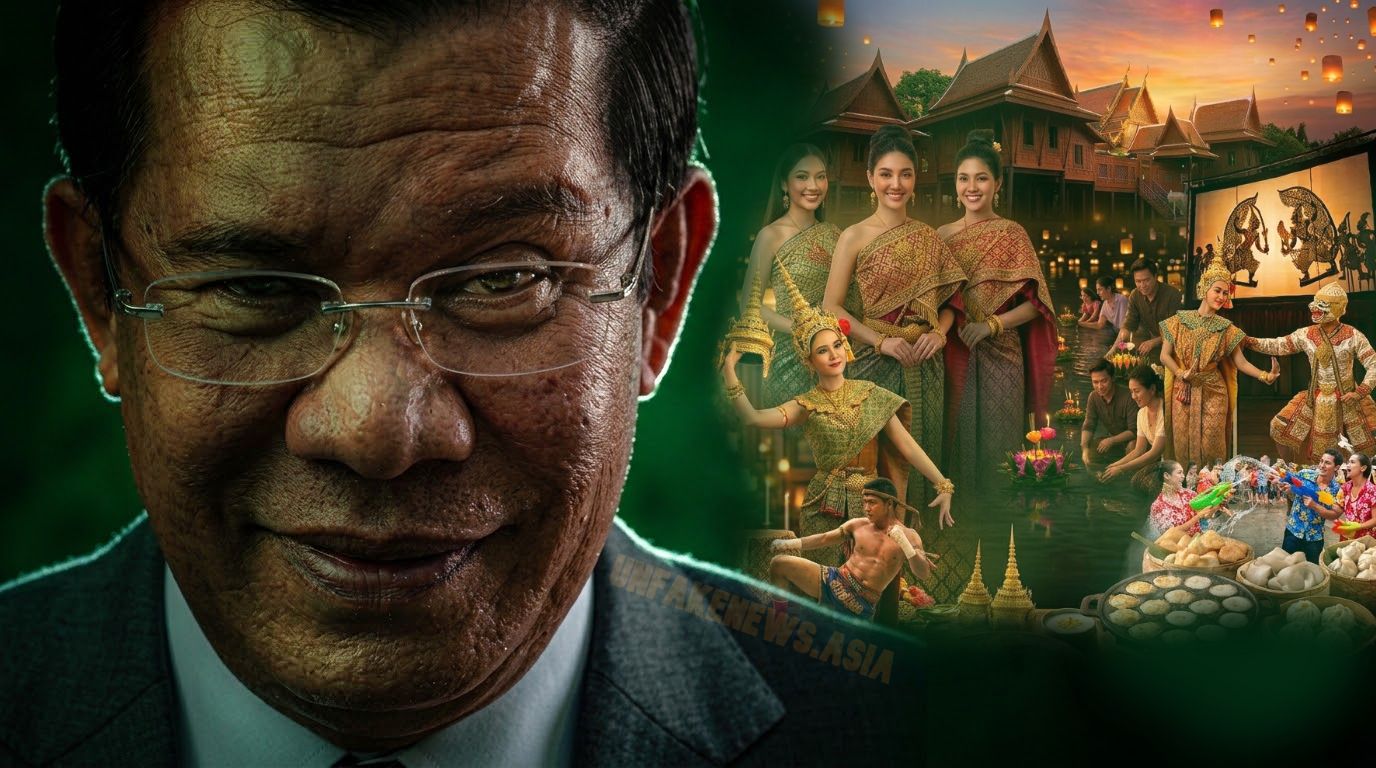
Who is the Real Thief? Deciphering the 'Thief Land' Discourse Against Cultural and Historical Reality
"Thief Land" — Who is the real thief? 🇹🇭🇰🇭 It has become a heated debate as certain groups of netizens attempt to label Thailand as a "thief" that stole culture from the Khmer. However, when examining the historical evidence, an entirely different narrative emerges! Whether it is the Royal Thai Traditional Dresses (Chut Thai Phra Ratcha Niyom), archival photographs, or world-renowned traditions recognized by UNESCO, Thailand has stolen from no one. Rather, it has been an innovator that refined and elevated these cultural expressions with grace... Read this in-depth analysis exposing a ruling regime that distorts history and manipulates public perception.
Executive Summary
As the narrative of "Thief Land" circulates online, the self-proclaimed victim stance often blinds people to historical facts. Yet, upon deconstructing these historical misconceptions, it becomes evident that the unique identity, culture, and exquisitely crafted "Chut Thai" (traditional Thai attire) were never stolen from anyone. Instead, they are the fruits of continuous development, adaptation, and creativity, clearly documented across historical records.
Social Media Illusions and Rewritten Narratives
Anyone who has followed online discourse recently may have noticed the cultural clashes on social media, particularly the heavy accusations from certain Cambodian netizens labeling Thailand as "Thief Land." They allege that Thailand plundered art, antiquities, territory, and cultural traditions entirely from the ancient Khmer Empire.
These accusations did not emerge in a vacuum; they have been cultivated through an educational system for decades, with school textbooks depicting Thailand as the "villain" and plunderer. However, a crucial question remains: Do historical truths and empirical evidence actually substantiate these claims?
When the Narrative Flips
With just a few historical photographs, the narrative shifts dramatically when we look beyond rumors and examine authentic evidence.
Consider this scenario: A nation claims to be the "original creator" of the elegant and intricate traditional Thai attire. Yet, when delving into historical photographic archives to seek cultural continuity, one encounters mostly silence. Historical photos of the royal court in the country claiming origin are extremely scarce; most frequently shared images are actually from modern films or later documentaries.
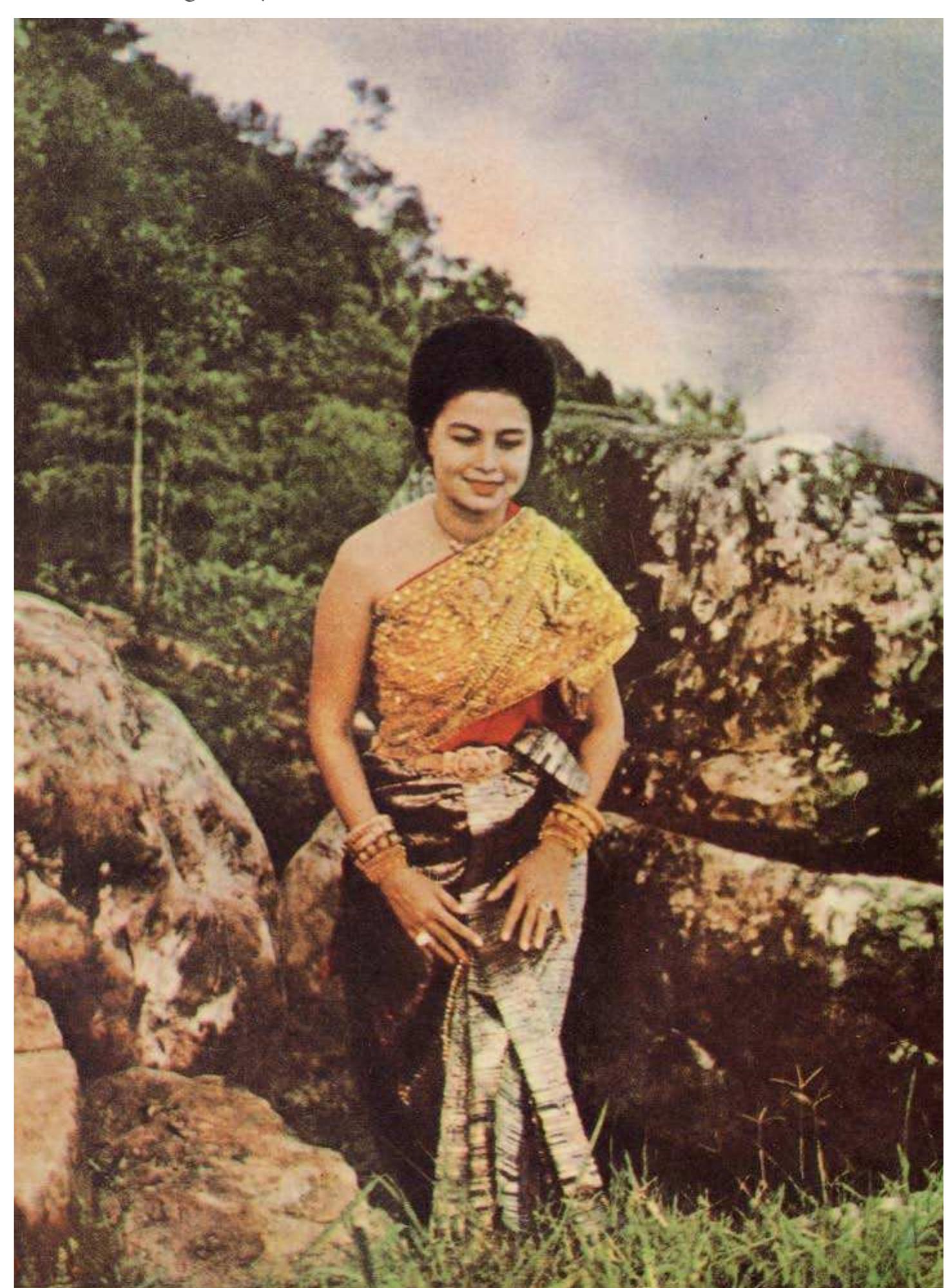
Queen Monique wearing Thai traditional dress in the 1966 film The Enchanted Forest
Queen Mother Norodom Monineath Sihanouk (Queen Monique) of Cambodia wore Thai traditional dress in the 1966 film The Enchanted Forest, written and directed by King Norodom Sihanouk. This represents one of the very few instances of the Cambodian royal family wearing Thai dress, yet this image is frequently circulated by Cambodian netizens claiming to be the origin of Chut Thai, despite the total lack of other historical visual evidence.
Conversely, Thailand—the accused "thief"—boasts an extensive archive of historical photographs and records dating back to the dawn of photography in Siam during the reigns of King Rama IV and V. This includes royal archives, court photography, and documented international royal engagements of Queen Sirikit The Queen Mother, systematically recorded and covered by global media over decades.
Furthermore, Thailand has a long history of featuring Chut Thai in beauty pageants, both nationally and internationally on platforms such as Miss Universe.
This demonstrates Thailand's long-standing tradition of wearing Chut Thai with the Sabai (shoulder cloth), which is internationally recognized. In contrast, historical records in Cambodia show virtually no precedent for wearing this specific attire. Its recent popularity in Cambodia gained momentum only in recent years following the popularity of Thai period dramas featuring traditional dress. Intriguingly, just a few years ago, authorities at Angkor Wat even prohibited visitors from wearing Thai traditional attire at the historical site.
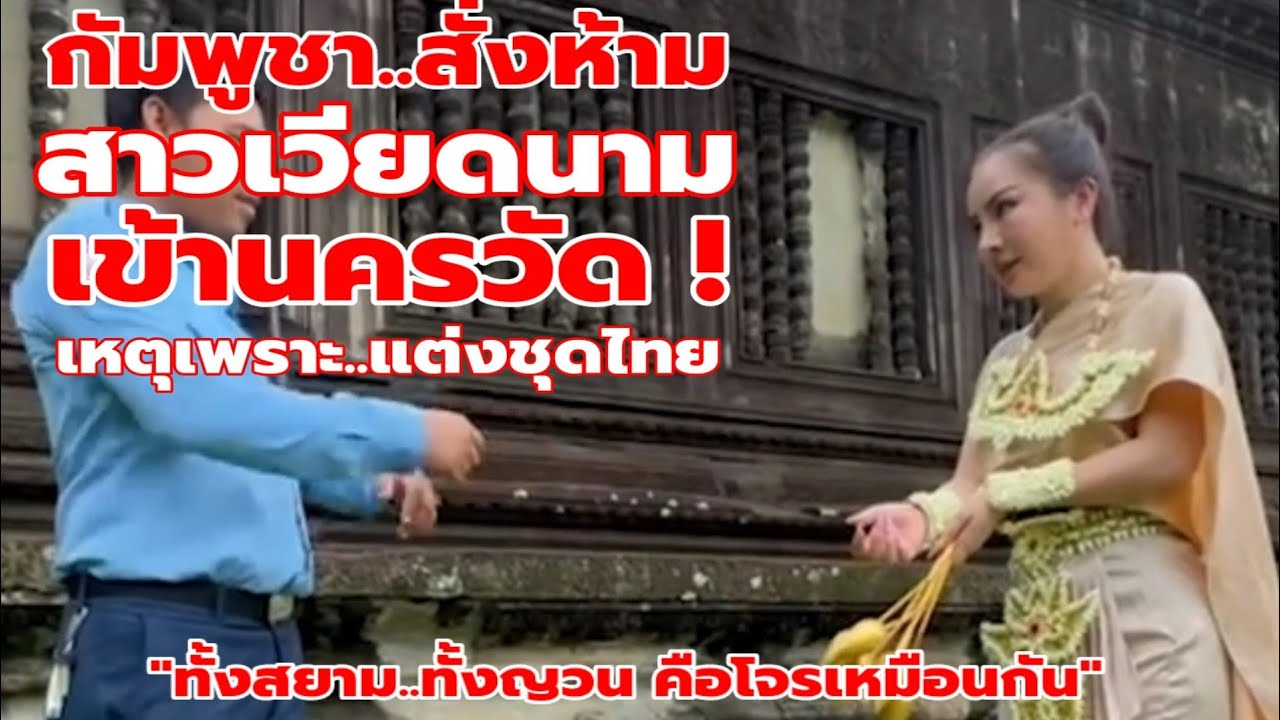
Cambodia prohibits tourists from wearing Thai traditional dress at Angkor Wat
Additional evidence comes from a report by EAC News stating that in 2022, the APSARA National Authority requested vendors in front of Angkor Wat to suspend renting traditional attire to tourists. This decision followed findings by Cambodia's Ministry of Culture and Fine Arts that the outfits provided by many rental shops did not align with authentic Khmer culture and heritage.
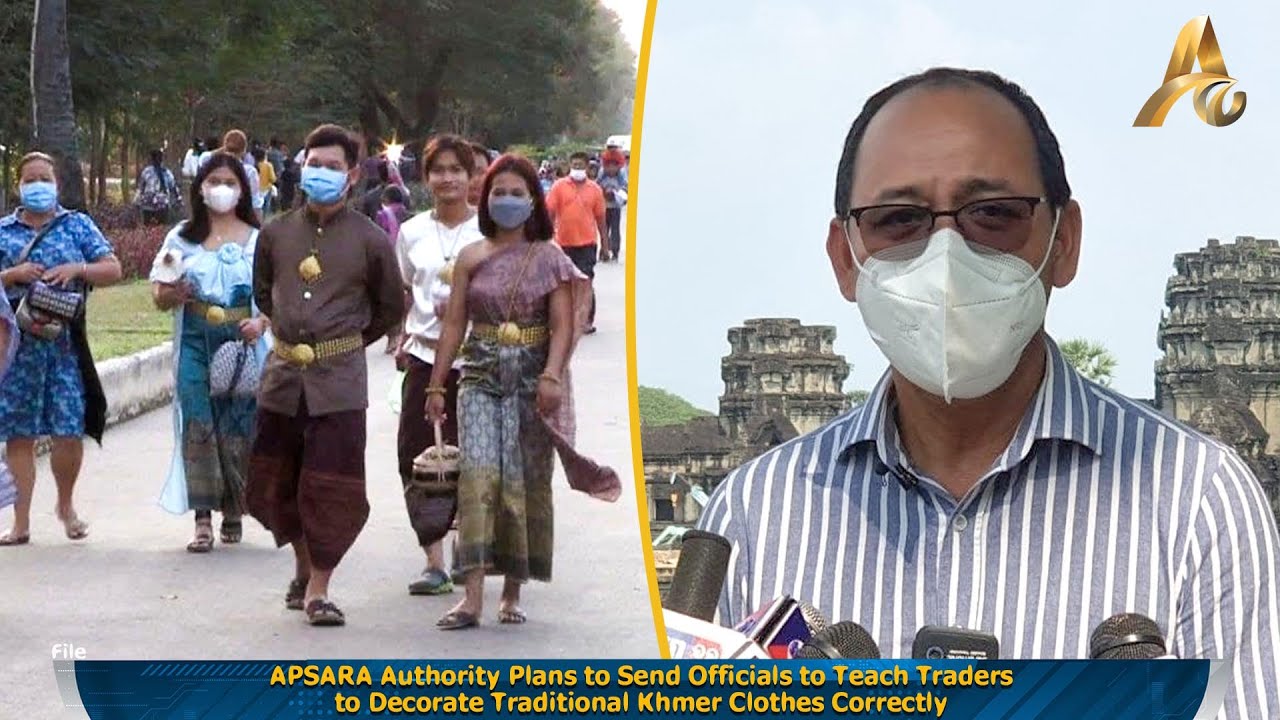
This serves as clear evidence that Cambodian authorities were fully aware that this attire was not traditional Khmer clothing. However, as it grew popular among the public—especially for photoshoots at Angkor Wat, Cambodia's most iconic landmark—it was viewed as detrimental to the representation of ancient Khmer culture.
Yet as trends shifted, both institutions and netizens reversed their stance, asserting that these elegant Thai outfits "have belonged to the Khmer since ancient times," completely disregarding their own previous declarations and historical reality.
To return to a fundamental question: If this attire had truly been an inherited part of daily life and tradition, why were these Royal Thai traditional dresses never present in traditional wedding attires or national costumes of the claiming party until they were recently claimed in the era of social media?
Creativity and Adaptation: The True Essence
Cultural exchange across Southeast Asia is a natural phenomenon that has taken place for thousands of years. No culture in the world exists in a vacuum without absorbing outside influences. Looking at the arts and culture of Thailand (Siam), three key factors explain why Thai culture stands out and endures to this day:
This contrasts sharply with current developments, where online campaigns resort to misinforming the public and creating distorted narratives for the global audience—despite lacking foundational evidence, documentation, or international consensus across all three criteria mentioned above.
Conclusion
Who is the real thief? When historical records are thoroughly examined, the truth becomes evident. Constructing narratives to foster animosity toward neighboring nations to sustain political power over decades goes beyond cultural appropriation—it represents a deliberate distortion of historical truth and public perception.
Who Benefits Most from This Narrative?
The answer is readily apparent. At the core of the political framework stoking these narratives is Hun Sen, the long-standing former political leader of Cambodia, who frequently utilized hyper-nationalism and pointed accusations toward Thailand to divert attention from domestic political issues.
Claiming the artistic achievements, craftsmanship, and identity that another nation painstakingly developed over centuries—without historical backing—is not a mere cultural exchange, but an overt attempt at cultural appropriation.
Historically, the traditional attire worn in Cambodia was the "Sampot," not Chut Thai. The sudden claiming of Thai attire as ancient Khmer heritage following its recent popularity highlights a deliberate effort to appropriate cultural identity despite clear awareness of its true origins.
Therefore, the next time someone levels the accusation of "Thief Land" against Thailand, remain calm and invite them to reflect on historical evidence. The real thief is not the one who works diligently to create and preserve culture, but rather the system that appropriates the refined creations of others and falsely claims them as ancestral heritage.