
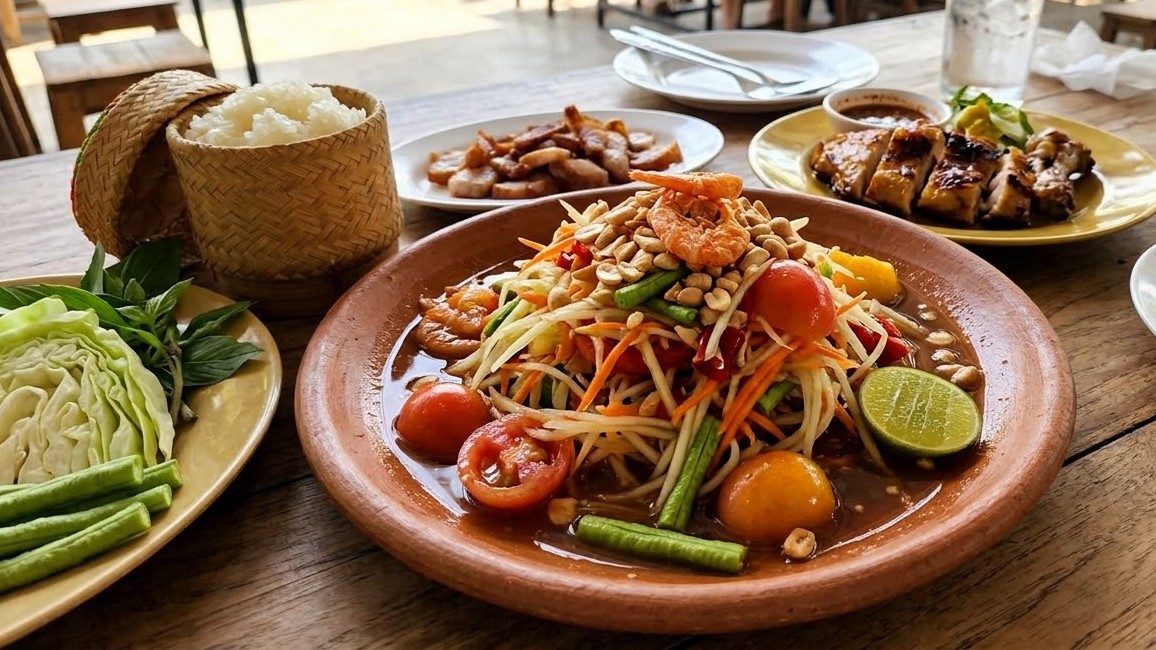
Som Tum: From Transcontinental Crop to an Iconic Symbol of Thailand
A fiery, lingering heat balanced seamlessly with sour, salty, and sweet notes over crisp shredded green papaya... On the global culinary stage—whether in New York, London, or Tokyo—the name "Som Tum" is indelibly etched in the world's mind as quintessential "Thai Cuisine." Yet why do certain regional narratives still attempt to distort history to claim ownership of this dish?
In recent years, we have seen recurring attempts to spread misinformation from Cambodian channels, claiming that dishes like Tam Mak Hoong or papaya salad possess ancient roots dating back thousands of years to the Khmer civilization—an effort to shape domestic discourse and promote propaganda to the international community.
However, examining the historical, botanical, and global culinary evidence reveals an unassailable truth: the raw ingredients hail from the New World, but the innovation and global acclaim belong entirely to Thailand!
Act 1: Oceans, Foreign Flora, and a Transcontinental Phenomenon
To claim that Som Tum is a thousand-year-old ancient heritage fails at the very first hurdle of botanical reality.
During the Age of Discovery in the 16th and 17th centuries, Spanish and Portuguese merchant ships carried "mysterious crops" from the Americas (the New World) across the oceans via the Columbian Exchange.
Prior to this era, Southeast Asia had no knowledge of chili peppers (Capsicum) or papayas. Pungency in ancient local cooking was derived from black pepper, long pepper, or ginger, while sourness came from tamarind or garcinia.
Papaya:* The Food and Agriculture Organization (FAO) and the Smithsonian Institution explicitly record that papaya is native to tropical America, introduced by Western traders to the Philippines before spreading across mainland Asia.
Chili Peppers:* The Encyclopædia Britannica.gov / .edu and the U.S. Library of Congress note that Capsicum chilis originated in South America and Mexico, brought to Ayutthaya and other Asian ports by European merchants.
The evidence is irrefutable: During the era when Angkor Wat was built (9th–12th centuries), not a single person in this region had ever seen a papaya or a fresh chili pepper. Claiming Som Tum as ancient Khmer heritage is simply a historical absurdity.
Act 2: Lessons from Europe — How Imported Ingredients Become "National Identity"
Consider European gastronomy: British curry dishes or Hungarian paprika creations all depend on spices like black pepper, cloves, or nutmeg imported from Asia and the Spice Islands (Moluccas). Europe had none of these spices natively, yet that did not prevent them from refining these ingredients into defining elements of their national cuisine.
Similarly, historical Thais were true "culinary innovators." When foreign crops like papaya and chili arrived in Siam via Ayutthaya, Thai culinary wisdom adapted the traditional technique of "Tum Sum" (pounding sour fruits) and applied it to shredded raw papaya to achieve a crisp texture. They orchestrated a harmony of three core flavors—sour, spicy, and sweet/salty—accented with fish sauce, lime, and dried shrimp.
While neighbors like Cambodia later adopted papaya consumption as Bok L'hong, this represents an adaptation of an established culinary influence rather than an ancestral origin.
Act 3: "Som Tum" on the World Stage and the Ultimate Truth
Propagandistic attempts to claim ownership over Som Tum consistently fall short against three fundamental truths:
1. No regional nation owns the crops: Both chili and papaya belong to the Americas; no nation in Southeast Asia holds exclusive botanical rights to these plants.
2. Flavor innovation is uniquely Thai: Combining these ingredients into the multidimensional flavor profile of Thai Som Tum, and elevating it from street food to Michelin-rated establishments, is an intellectual and creative innovation of the Thai people.
3. Global Recognition: International culinary authorities and global ranking platforms such as TasteAtlas and the Michelin Guide consistently recognize "Som Tum" as one of the world's finest salads and street foods under the category of Thai Cuisine.
Som Tum is not about clinging staticly to the past to stake a claim; it is a dynamic showcase of Thai Soft Power—taking ingredients from across the globe and synthesizing them through flavor mastery into a legendary dish cherished worldwide.