
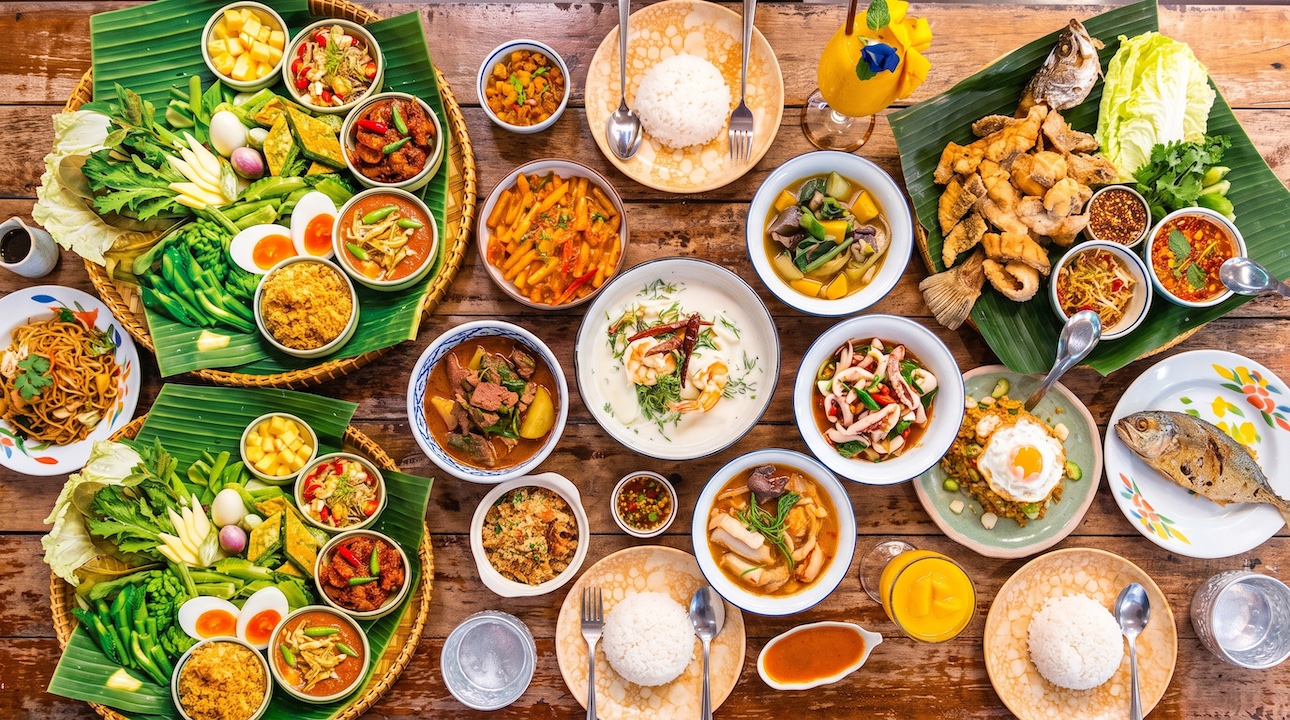
Debunking Claims on Thai Cuisine: Historical and Linguistic Evidence Refutes Cultural Disputes
The online phenomenon dubbed 'Claim-bodia' by Thai media spans various disputes—from Khanom Krok claimed as 'Nom Krouk' on MasterChef Cambodia, to Pad Krapow claimed as Cambodian in origin, to campaigns demanding name changes for Tom Yum Kung right after its UNESCO Intangible Cultural Heritage inscription. This article systematically examines each case, presenting definitive refutations alongside nuanced perspectives on shared regional culinary traditions, offering readers a comprehensive, evidence-based understanding beyond online drama.
When "Thai Food" Becomes a Cultural Battlefield:
Case Studies of Khanom Krok, Pad Krapow, Khanom Chin, Pad Thai, Ho Mok, Tom Yum Kung, and Sweets Swept Under Blanket Claims
Over the past few years, a phenomenon often referred to by Thai media as "Claim-bodia" has resurfaced repeatedly across Thai social media platforms. This term describes instances where individuals or media outlets in Cambodia claim that dishes, desserts, or cultural practices well-known in Thailand and integral to Thai identity originally hailed from Cambodia. This article compiles real-world cases alongside key linguistic and historical evidence for analysis.
The Case of "Khanom Krok" vs. "Nom Krouk"
The most prominent case occurred in September 2024, when MasterChef Cambodia featured a dish identical in appearance to Thai Khanom Krok. The hosts and contestants identified it as "Nom Krouk," a traditional dessert allegedly consumed in Cambodia since ancient times. This sparked widespread discussion on Thai social media, particularly because Khanom Krok had been ranked by TasteAtlas as one of the world's best pancakes/desserts earlier that same year, causing the topic to go viral twice in a single year.
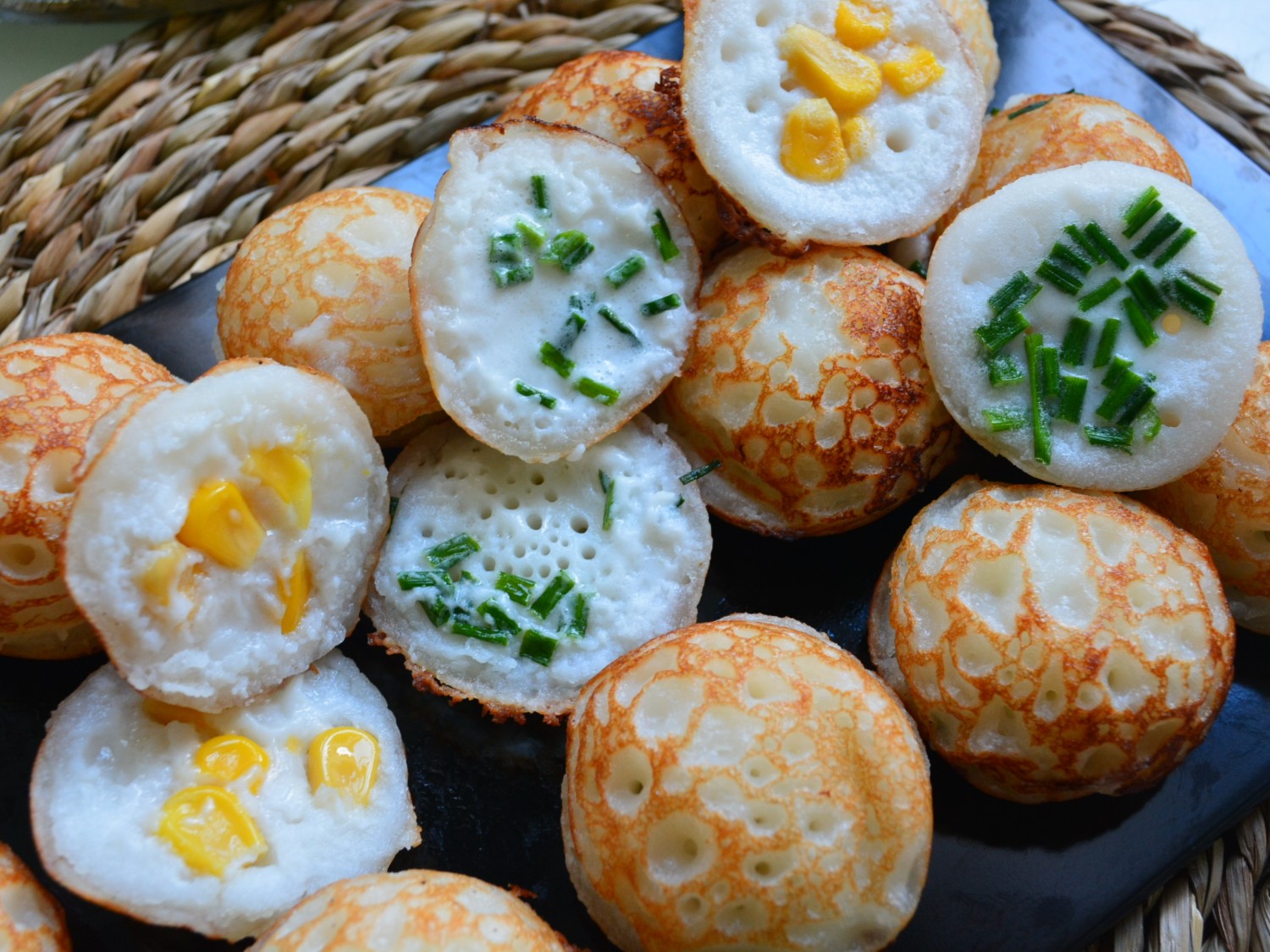
Khanom Krok
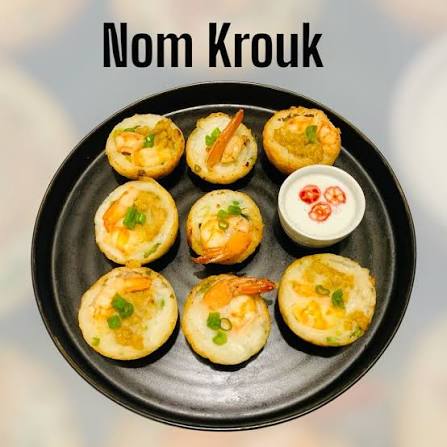
Nom Krouk
A compelling counterargument raised by Thai netizens involves etymology: the word khanom (sweet/snack) is borrowed from the Malay language, while krok belongs to the Tai language family, referring to the mortar-like dimpled pan used to pour the batter—directly reflecting the cooking technique that gave the dish its name. Conversely, observers note that the Khmer name "Nom Krouk" likely represents a phonetic and semantic borrowing from Thai, rather than deriving from indigenous Khmer roots.
The Case of "Pad Krapow"
Another dish subjected to claims is Pad Krapow, a staple stir-fry served over rice eaten daily across Thailand. When claimed as an "authentic original" of Cambodian origin, it triggered backlash not only among Thais but also among netizens from other ASEAN nations who disputed the assertion. Crucially, krapow refers to holy basil (a specific aromatic herb) with a distinct designation in the Thai language that defines the dish itself. Claims of ownership are thus frequently met with requests for historical terminology and evidence of its use in traditional Khmer culinary culture.
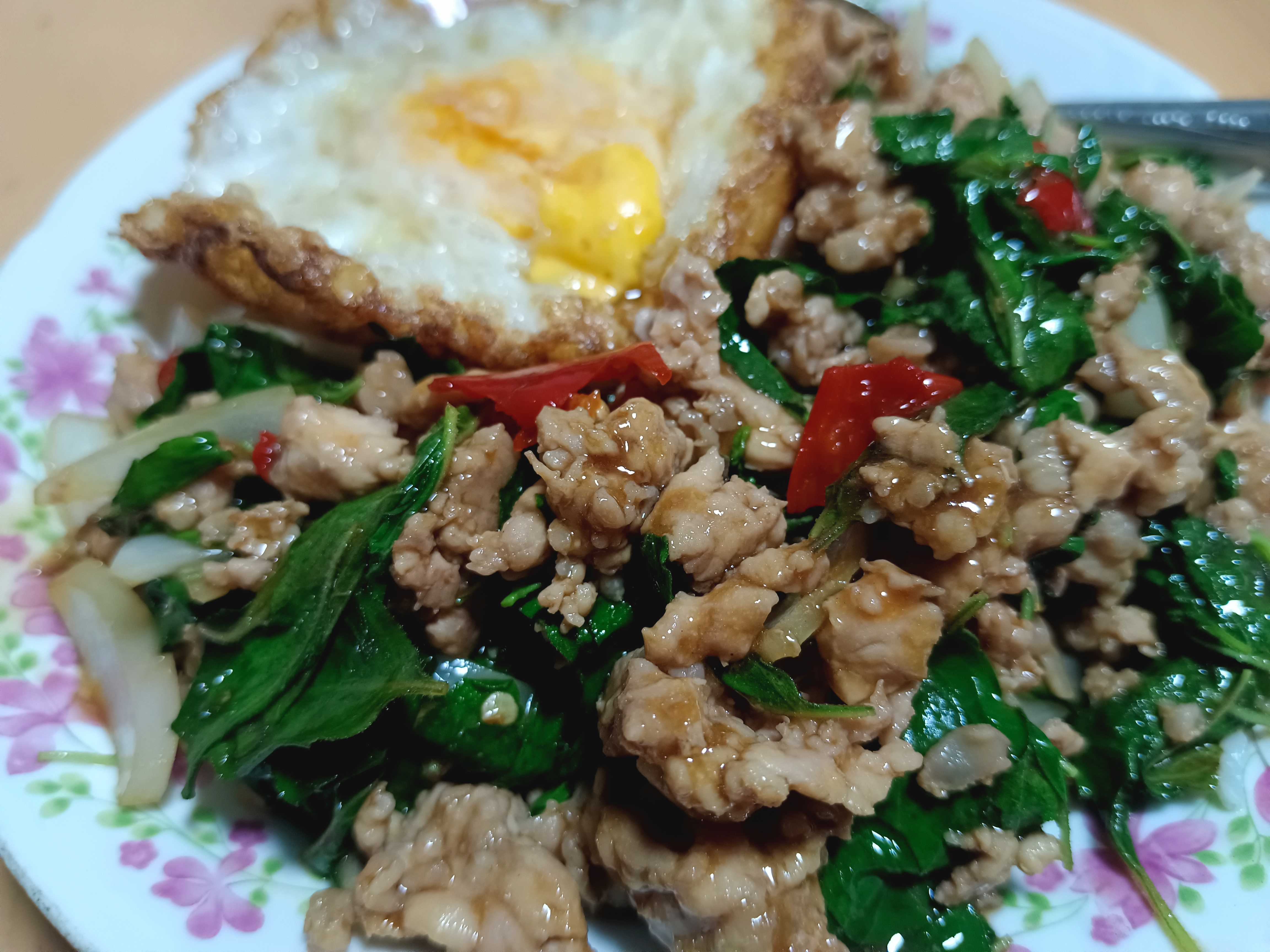
Pad Krapow with Fried Egg
The Case of "Khanom Chin" vs. "Nom Banh Chok"
Khanom Chin requires a more nuanced discussion. Cambodia possesses a long-standing traditional dish called Nom Banh Chok, featuring fermented rice noodles that play a vital role in daily Cambodian life. Thus, this is not an entirely unfounded claim. Some culinary scholars observe that the word Khanom Chin might reflect a cross-linguistic blend: khanom (snack/dessert) from Thai, banh (flour/bread) from Vietnamese, and chok (to pinch/grab) from Khmer. This suggests that fermented rice noodle dishes evolved collectively across the region rather than belonging exclusively to a single nation. Consequently, this serves as an exemplary case of "shared regional heritage" rather than an ungrounded claim.
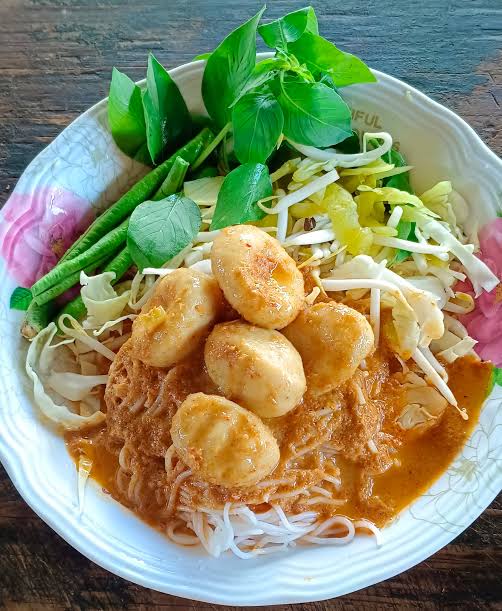
Khanom Chin Nam Ya Pa
The Case of "Pad Thai": When History Makes Claims Illogical
Pad Thai has also appeared on lists of dishes claimed by Cambodian sources. However, this case is particularly notable because Pad Thai possesses far clearer historical documentation than many older traditional dishes. It was officially created and popularized during Field Marshal Plaek Phibunsongkhram’s administration in the late 1930s to early 1940s as part of a nationalistic campaign to promote stir-fried noodles, reduce rice consumption, and foster a modern Thai identity. Supported by clear written historical records, assertions that Pad Thai is an "ancient" dish originating elsewhere run contrary to established historical facts.
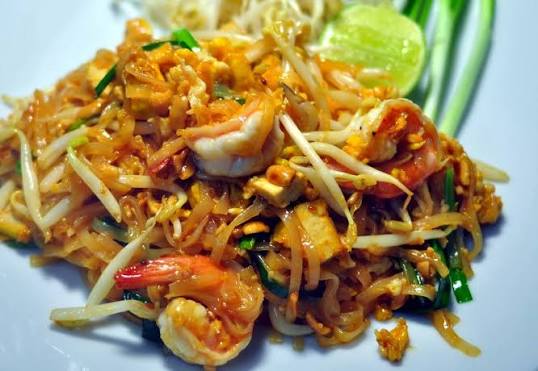
Pad Thai
The Case of "Ho Mok" vs. "Amok Trey"
The Cambodian dish most similar in appearance to Thai Ho Mok is Amok or Amok Trey—steamed fish in a coconut curry custard. Historical scholars of Thai culinary arts, such as Ong Bunjun (author of Beside the Southeast Asian Dining Table), offer an insightful academic perspective. Bunjun notes that Amok is one of two prominent Cambodian dishes influenced by Thai cuisine. During periods when Cambodia was a tributary state of Siam, the Siamese and Cambodian royal courts engaged in extensive two-way cultural exchanges spanning architecture, language, attire, performing arts, and gastronomy. This case serves as a strong example of using academic evidence to explain cultural interconnectedness rather than outright denying historical ties.
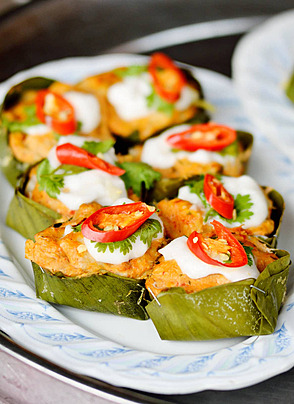
Ho Mok
The Case of "Tom Yum Kung" and UNESCO Inscription
Tom Yum Kung presents a case backed by official international recognition. On December 4, 2024, UNESCO officially inscribed Tom Yum Kung on the Representative List of the Intangible Cultural Heritage of Humanity under Thailand. Subsequently, in April 2026, reports surfaced regarding campaigns by certain Cambodian groups to rename the dish into Khmer terms such as "sour shrimp" or "spicy sour seafood," accompanied by assertions of ancestral Khmer origins. This highlights how international cultural heritage registration serves as one of the most authoritative evidence-based mechanisms to settle cultural origin disputes, having undergone formal international vetting.
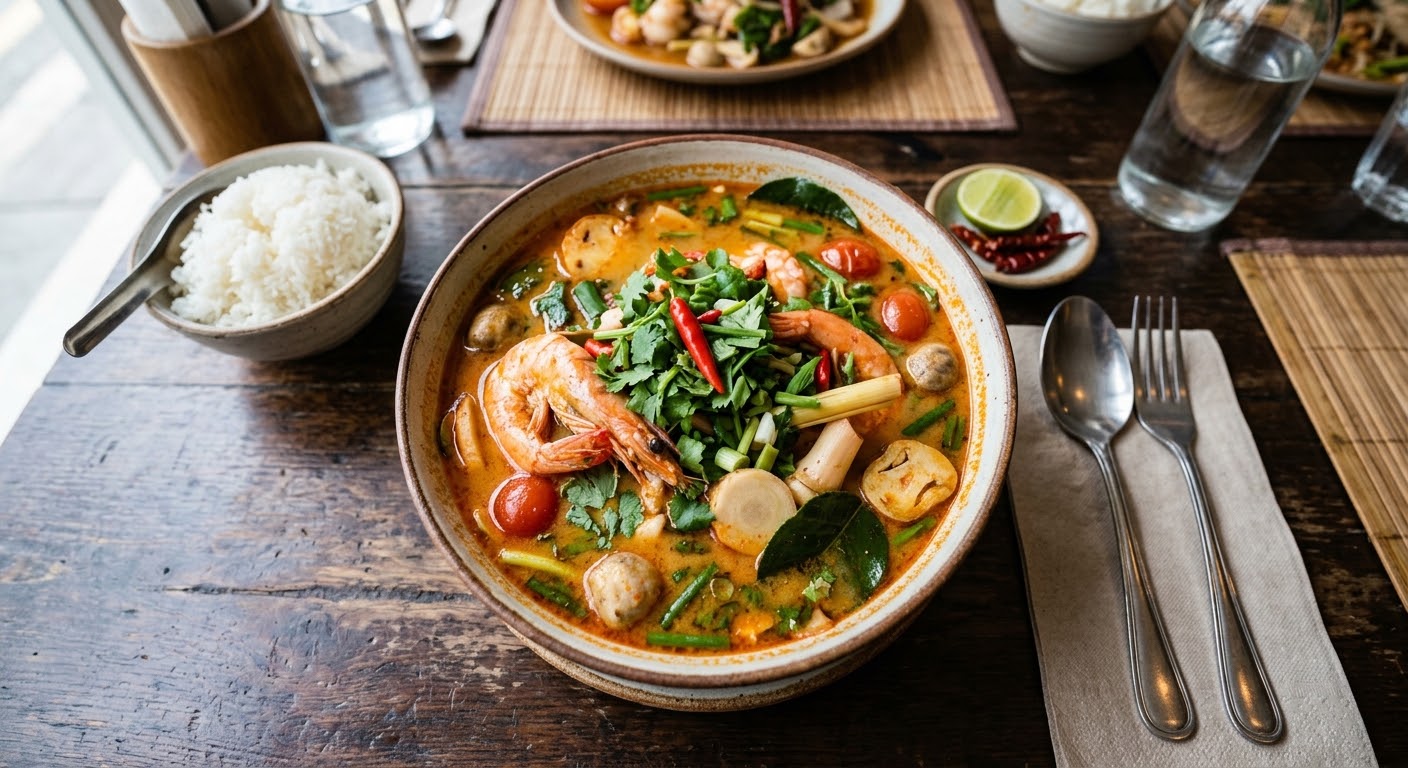
Tom Yum Kung
The Case of Blanket Claims on "Thai Sweets"
Beyond individual dishes, March 2023 saw claims categorizing Thai traditional desserts (Khanom Thai) as a whole as "Khmer sweets." Occurring around the same time as claims that Muay Thai originated from Kun Khmer, this demonstrates that the phenomenon extends beyond gastronomy into broader cultural identity construction.
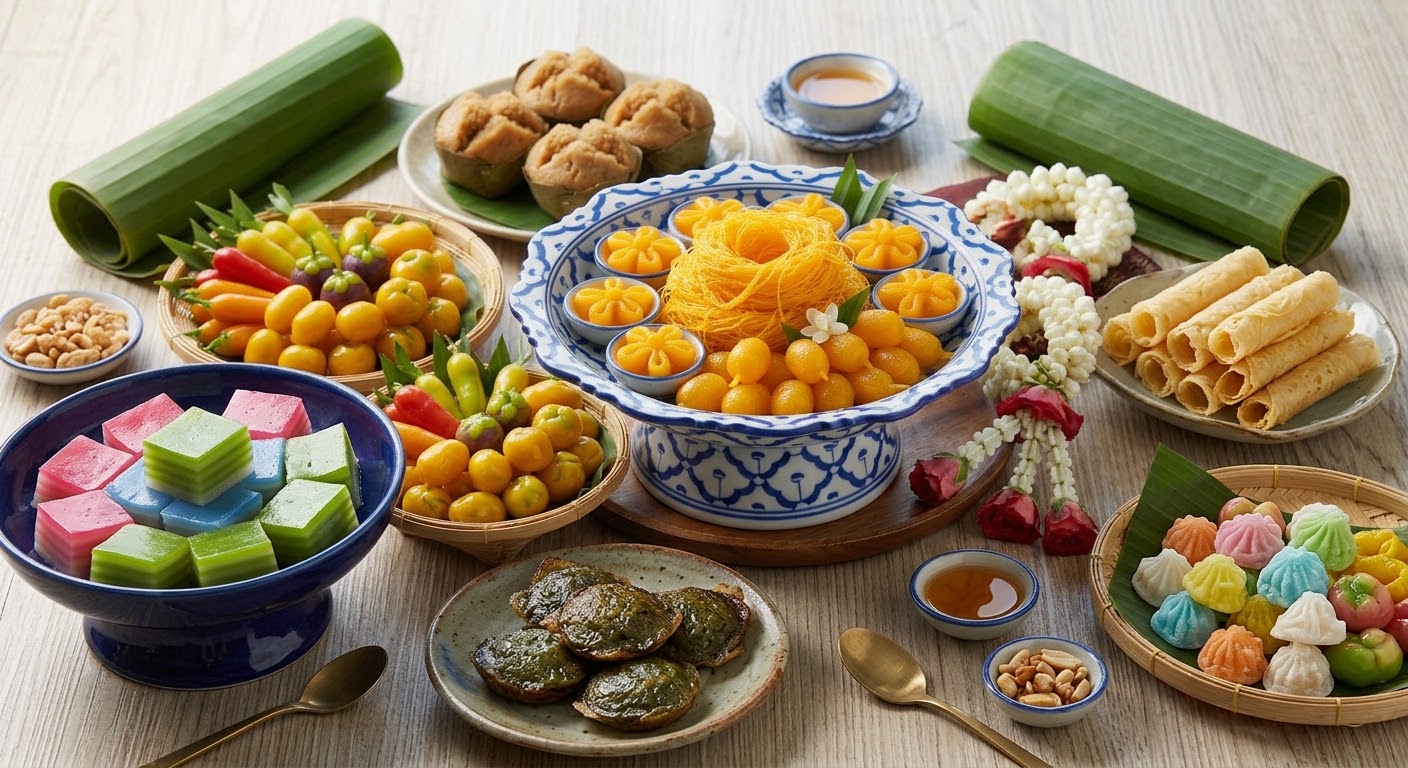
A crucial distinction is that Thailand has never claimed sole "origin" over these desserts. Thai society openly acknowledges and teaches the origins of egg-yolk-based sweets—such as Thong Yip, Thong Yod, Foi Thong, and Khanom Mo Kaeng—tracing them to 17th-century Portuguese recipes (e.g., Doce de ovos and Fios de ovos) brought to the Ayutthaya court by Maria Guyomar de Pinha (Thao Thong Kip Ma). This history is part of standard educational curricula and public knowledge, never concealed or denied.
Thai Desserts
What transformed these treats into uniquely "Thai desserts" was not a claim of original invention, but the historical process of adapting recipes, aesthetics, and culinary contexts to harmonize with Thai culture until they became entirely distinct from their European predecessors. Indeed, if modern Thong Yip or Thong Yod were served to people in Portugal today, they would hardly recognize them as Portuguese dishes. Therefore, blanket assertions claiming all "Thai desserts" as "Khmer sweets" lack grounding, as they lay claim to dishes that Thailand itself never claimed as exclusive native inventions, while the contextual adaptation into Thai culinary identity remains a documented historical fact within Thailand.
The Practice of Labeling Multiple Thai Dishes as "Khmer Food"
Another trend involves online pages or channels displaying images of multiple Thai dishes—such as Pad Thai, Tom Yum Kung, Khanom Chin, and Som Tam—under collective titles like "Khmer Food." In some cases, exact Thai names like "Pad Thai" are retained while attributing the dish to Cambodia. Unlike cases where distinct Khmer names were used (e.g., Nom Krouk, Amok), this direct adoption of Thai dish names and imagery without renaming makes refutation more straightforward.
Common Patterns Across Multiple Cases
A review of these online trends reveals a repeating pattern seen across various items, including Khao Khluk Kapi (shrimp paste fried rice), Green Curry, Chicken with Cashew Nuts, Rad Na, Pad See Ew, Boat Noodles, Som Tam, and Larb/Nam Tok, which have occasionally been labeled as "Cambodian food" by Cambodian establishments abroad without clear historical attribution. Common characteristics include:
Often occurring after Thai dishes receive international acclaim or awards (e.g., on platforms like TasteAtlas).
A lack of supporting historical or linguistic evidence, relying instead on generalized assertions of "ancient tradition."
Instances where former kitchen staff who worked in Thai restaurants return home to open eateries, replicating dishes visually without deep culinary knowledge, resulting in distinct taste profiles while adding the descriptor "ancient" to claim heritage.
Significant linguistic similarities between Khmer terms and Thai words, reflecting a well-documented history of long-term bidirectional vocabulary borrowing between the two languages.
---