
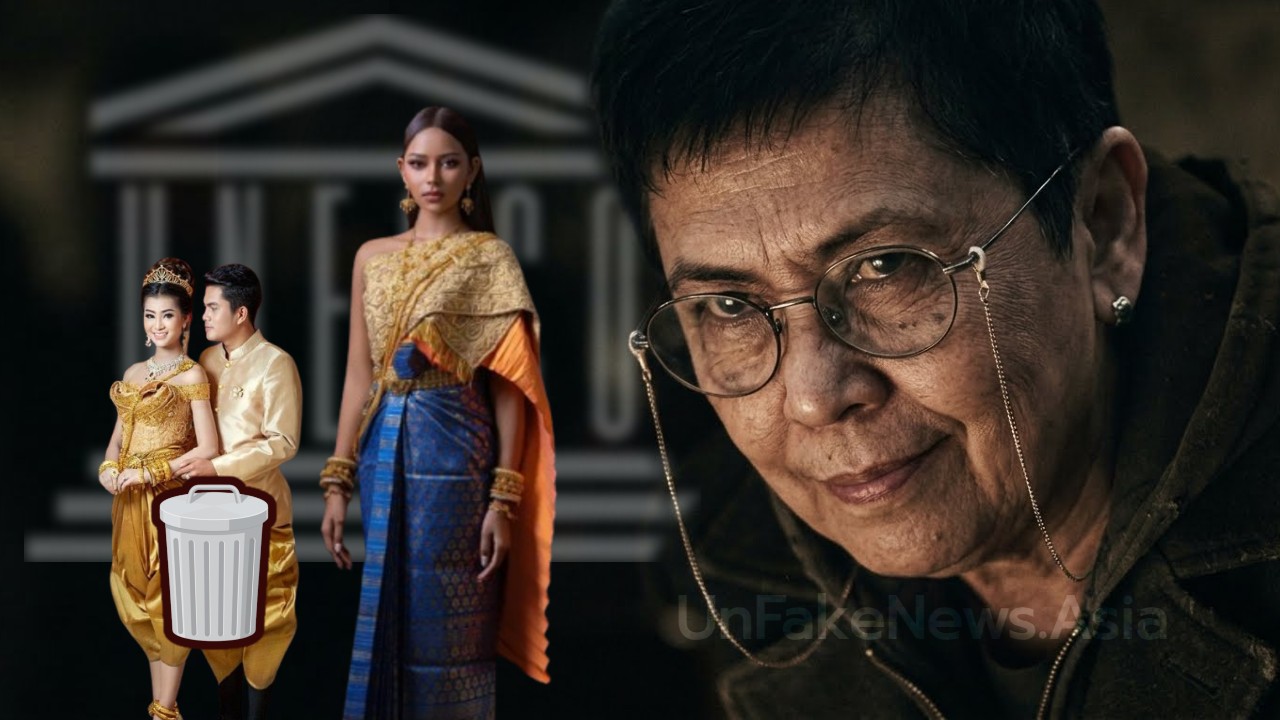
Cambodia Misleads UNESCO in Attempt to Claim Non-Native Cultural Heritage (2026 Inscription)
Cambodia submitted a proposal to register the "Traditional Khmer Wedding" with UNESCO for 2026. However, several accompanying images published on the ich.unesco.org website do not correspond to the traditional Khmer wedding attire, the Sampot. Meanwhile, in practice, many modern Cambodian brides and grooms widely prefer wearing Thai-style sbai attire for their actual weddings. This article examines visual evidence from the original document, comparing it with the Thai Royal National Costumes, alongside statements from the Ministries of Culture of both nations, allowing readers to examine and judge the evidence for themselves.
Summary of the Issue
Cambodia has submitted a nomination for the "Traditional Khmer Wedding" to UNESCO's Representative List of the Intangible Cultural Heritage of Humanity (2026). However, several supporting images published on the ich.unesco.org website do not correspond to the Sampot, which serves as both the national attire and traditional wedding dress of Cambodia. Meanwhile, contemporary wedding practices show that numerous Cambodian couples widely opt to wear Thai-style sbai garments for their actual wedding ceremonies.
The Origin of Two Distinct Cultural Paths
Historical and academic evidence consistently indicates that both nations possess distinct traditions of dress:
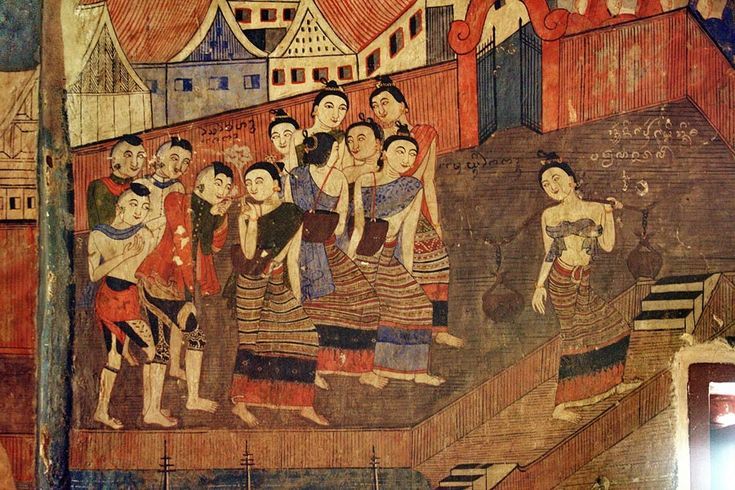
A mural depicting Siamese (Thai) people at a temple in Myanmar following the Fall of Ayutthaya (over 400 years ago), when Siamese captives were taken to Myanmar. The mural illustrates numerous Siamese women wearing the sbai.
Continuing through the Rattanakosin period and into the modern era, Her Majesty Queen Sirikit The Queen Mother initiated a project during the 1960s in collaboration with French fashion designer Pierre Balmain to standardize and refine these traditional garments. This resulted in the eight styles of the "Thai Royal National Costumes." Among them is the Chakkri style, characterized by a single diagonal sbai draped over one shoulder, leaving the other shoulder bare, with the fabric tail trailing gracefully down the back. Further information can be found at the Queen Sirikit Museum of Textiles.
The Popularity of Thai Attire in Cambodian Weddings: Verifiable Facts
A major shift occurred when Thailand exported the phenomenal hit period drama Love Destiny (Bupphesannivas) across the region. The elegance of the flowing Thai sbai combined with intricate embroidery sparked immense fascination in Cambodia. This trend was not merely a subjective impression; it is backed by extensive photographic evidence from real Cambodian weddings. Images of Cambodian brides wearing diagonal shoulder drapes paired with brocade skirts and ornamental belts became widely prevalent. This contrasts sharply with Cambodian wedding photographs taken before the broadcast of Love Destiny, which consistently featured traditional Sampot attire. This surge in popularity reached a point where Cambodian authorities previously issued prohibitions against taking photos in Thai dress within the Angkor Wat complex, acknowledging that it was not native traditional costume.
Cambodian Weddings Prior to the Broadcast of "Love Destiny"
For generations, Cambodians maintained a long-standing wedding tradition centered around the Sampot. Even in recent years, particularly prior to 2020, couples consistently adhered to this traditional attire.
"Love Destiny": The Catalyst for Cultural Distortion
The Thai historical television series Love Destiny (Bupphesannivas) is set during the reign of King Narai the Great of the Ayutthaya Kingdom (c. 1656–1688), roughly 340 to 370 years ago. High-ranking female characters in the series are depicted wearing diagonal sbai shoulder wraps. The drama became an immense hit both in Thailand and neighboring countries.
The massive popularity of the drama Love Destiny created a trend where many Cambodians adopted the attire, eventually escalating into claims of cultural ownership.
Upon watching Love Destiny, viewers in Cambodia developed an overwhelming interest in the show, much like audiences elsewhere who admired both the storyline and traditional Thai costumes. However, while audiences in other countries merely wore the costumes for photoshoots, a movement in Cambodia went further, asserting that these garments were ancient Khmer attire stolen by Thailand—an effort that eventually gained systematic support from Cambodian state mechanisms.
Cambodian wedding attire featuring Thai-style dress following the influence of Thai drama, accompanied by claims of native origin
Despite initial restrictions by officials who recognized that these garments were not Cambodian, the overwhelming popularity led to official endorsement of the claims. However, unable to submit a direct claim to UNESCO for the costume itself—given the clear international recognition of the garment as Thai national dress—Cambodia circumvented this by embedding imagery of the attire within their UNESCO nomination dossier for traditional weddings, while omitting textual explanations or historical provenance for the attire. Should the inscription be granted for traditional Khmer weddings, critics argue the focus will shift toward asserting ownership over the national costume, evidenced by advance celebrations organized months beforehand.
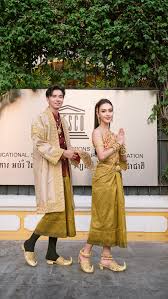
Thai-style dress used in wedding showcases prepared in advance in Cambodia ahead of the UNESCO decision.
The Echo Chamber and Arguments Over Cultural Origins
Driven by popular enthusiasm and reinforced by an internal echo chamber resistant to external historical facts, a narrative emerged claiming: "This sbai garment belonged to the Khmer since ancient times; it was the Siamese who stole it from us!" Bas-reliefs on Angkor Wat walls are frequently cited as depicting women wearing sbai, despite historical and archaeological consensus confirming that those carvings depict Hindu hermits or ascetics rather than female civilian dress.
Imagery in the UNESCO Dossier: Observed Facts and Open Questions
The application dossier for "Traditional Khmer wedding (Cambodia)" — Nomination: Representative List 2026, published on the website ich.unesco.org.gov / .edu, contains several photographs illustrating wedding rituals.
Direct Observations from the Images: At least one photograph depicts a bride wearing a garment with one shoulder exposed while the other is covered by a draped cloth, departing from the traditional symmetrical structure of classical Sampot upper wear. To address the matter objectively: earlier Thai news reports (e.g., The Nation Thailand, July 2025) noted that both Thai and Cambodian cultural ministries denied finding Thai dress imagery in the dossier at that time. However, those statements were made prior to the official public release of the complete submission. Now that the documents are fully accessible on the ich.unesco.org portal, readers may inspect the original images directly.
Unresolved Questions
Key questions surrounding the visual documentation submitted to UNESCO warrant careful evaluation by the evaluating committee: